
How do I find a coffee I'll love from Good Life Coffee's range?
The purpose of this text is to help you find your way to the right coffees in our selection.
Coffee is a fruit
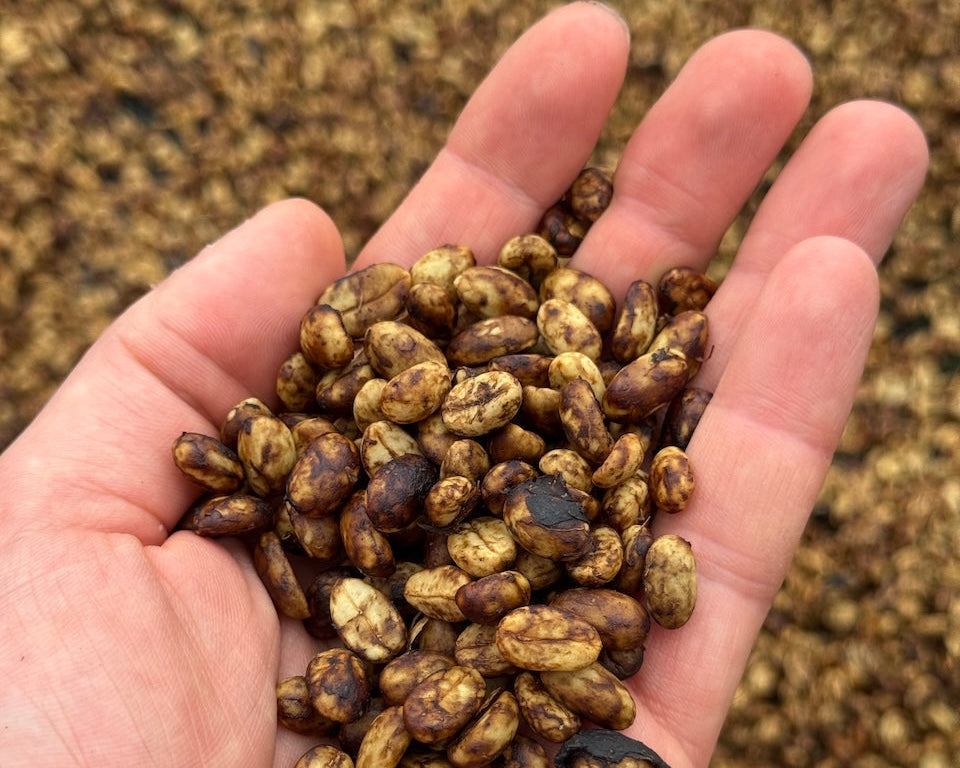
Many people don't think of it this way, but coffee is a fruit, just like an apple or a strawberry, or more precisely a drupe, but let's not go there. :D Coffee cherries ripen and are harvested once a year, with the timing depending on the country of origin and its location relative to the equator. That's why GLC's range keeps changing throughout the year: we buy green coffee in small, fresh batches, and a single coffee is usually available for about 2 to 6 months before it sells out. So if you fall in love with a particular coffee, enjoy it while it's around. We also keep similarly styled options in our range at all times, so you can trust that a new favorite will most likely show up to replace your old one.
Our roasting philosophy: the raw material comes first
Roasting is a craft, and for us its purpose isn't to cover up a coffee's original character, but to bring it out as purely as possible. Every coffee grows in a particular soil, at a particular altitude, and in the hands of a particular farmer, and these factors already shape the bean's flavor profile before a single gram of it has been roasted. Our roaster Richard's job is to find the roast curve that brings out each raw material's best qualities: flavor, balance, and sweetness, without letting the coffee stay underdeveloped or "raw," which would make it taste grainy.
This philosophy also means we don't roast our coffees very dark, since that's where the roast's own flavor (often burnt, smoky, or bitter) takes over from the raw material underneath it.

Two roast styles, filter coffee and espresso: what do they mean?
In our online store, you'll see each coffee labeled either "filter coffee" or "espresso/dark filter coffee." These are practical hints about which brewing method the coffee suits best, and what kind of flavor or mouthfeel you can expect.
Filter coffee
For us, this means the coffee is roasted somewhere between light and medium depending on what traits we want to highlight in the cup. It's a lighter roast that leaves room for the coffee's own, often fruity and floral notes. It works with any filter method: a traditional drip machine, an AeroPress, a pour over dripper, or a French press. Even though the roast is light, the coffee is never bland or watery. These coffees always have clear flavor, balance, and sweetness. They're also the coffees Good Life Coffee is best known for, so if you're new to us, we recommend starting here.
Espresso/dark filter coffee
The coffee is roasted a bit darker. It works beautifully in an espresso machine and a moka pot, but also suits filter brewing and a French press if you prefer a bolder, fuller cup. Even our darker roast never goes so far that the coffee's own character disappears under the roastiness.
We don't split roast levels any more finely than this, because we believe this simple divide already points you in the right direction: lighter and more fruity, or bolder and fuller?
Explore our espresso coffees →
Flavor notes and processing unlock the flavor profile
When a coffee's description mentions something like "orange" or "dark chocolate," that's not about spices or added flavoring, our coffees are never flavored. It's about the flavor notes you can find in the coffee thanks to its natural qualities and the roast, a bit like how you can taste cherry or vanilla in a wine without either ever being added to it.
Many factors play a part in creating the flavour profile of a coffee; coffee's origin, variety, and processing method, meaning the way the fruit's flesh is removed from around the bean before drying. So the same origin and variety can taste quite different depending on how the coffee was processed. If you'd like to dig deeper into this, we've written a more detailed piece on the topic: Coffee Processing Methods, Explained Simply.
Flavor notes
Berries or fresh fruit usually point to higher acidity, while chocolatey and nutty notes point to lower acidity. Tropical fruit hints at natural processing or a funkier profile.
Flavour notes describe natural characteristics, not added flavourings. Notice which descriptions appeal to you most and which don't. Here are a few common terms to help guide your choice:
Light & delicate: floral, tea-like, elegant, bergamot
Bright & acidic: citrusy, berry-like, green apple, hibiscus
→ You will often see these describe our washed process coffees
Bold & full bodied: chocolatey, toasted nuts, dark cherry, toffee
Funky & exotic: pineapple, mango, papaya, wine-like
→ And these regularly describe our natural or anaerobic process coffees.

Milk or black?
Both ways work well with the coffees in our range, but here are a few things worth keeping in mind depending on how you drink yours.
Black, please!
All of our filter coffees are balanced, clean cups without the bitterness you get from dark roasted coffee. We especially recommend drinking our filter coffees black, so the coffee's fruity, unique flavors can really shine. Our espresso/dark filter coffees also work great black, they're just a bit bolder.

If you'd rather have (plant based) milk
Every coffee in our espresso/dark filter category pairs naturally well with milk. On the filter side, natural and honey processed coffees in particular work well with milk, since they tend to be fuller bodied. Washed coffees are brighter, more acidic, and lighter, so milk can end up masking some of their flavor.
When drinking with milk, you can also try brewing your coffee a bit stronger than usual, so the flavor still comes through once you add milk. You can do this by grinding finer or using a bit more coffee relative to water. A common rule of thumb is 6 to 7g of coffee per 1dl of water.
What if I like really dark coffee?
Then your best bet is our espresso roast first. If you're after the boldest, most intense option in our range, check out our coffee with the black label, it's usually the richest coffee in our lineup. That said, it's not always available. Don't shy away from our other coffees either, even if they're not roasted dark: you'll find flavor and character in every bag, no matter the roast level. Give it a try, you might be surprised!
Ground or whole bean?
You can choose your coffee as whole beans or pre ground for a drip machine or moka pot. If you need a different grind, just mention it when you order. Unfortunately, we don't grind coffee for espresso, since espresso grind is such a precise, exacting thing that the wrong grind size can ruin the whole brew. So if you're an espresso lover, it's worth investing in your own grinder.
We recommend a good grinder to anyone who loves coffee, since it's what gets you the best flavor at home. Read more about grinders on our blog: Why You Should Grind Your Own Coffee, and Which Grinder Is Right for You?
I don't want caffeine
If you avoid or cut back on caffeine, our range always includes one decaf coffee, roasted to work well for both filter and espresso brewing.
For more info, check out our FAQ section, or feel free to email us at info@goodlifecoffee.fi, we're happy to help you find the coffee that's right for you.