
Good Life Coffee
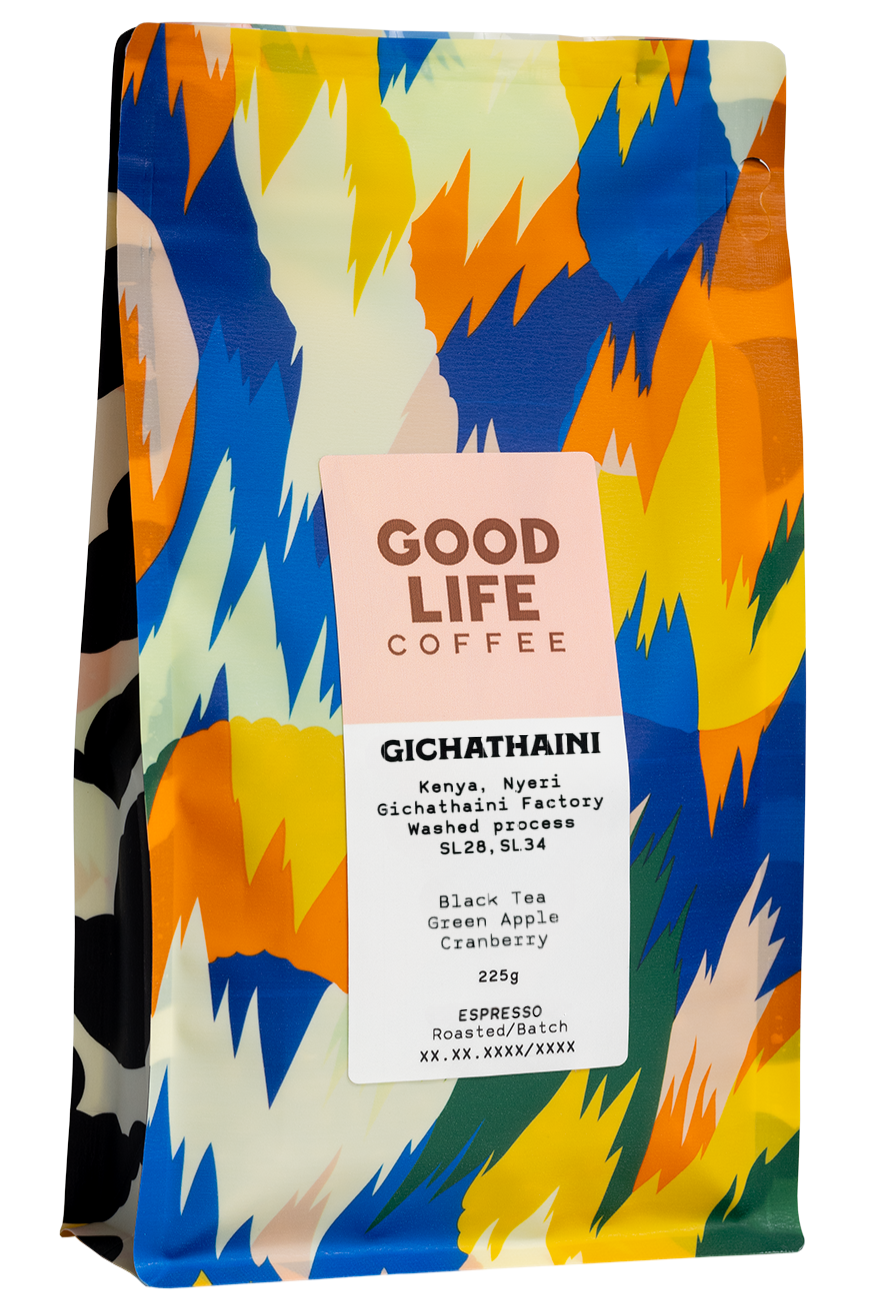
GICHATHAINI PB, KENYA - ESPRESSO / DARK FILTER COFFEE
Country: Kenya
Field: Nyeri, Karatina
Producer: Gikanda Farmers Cooperative Society
Processing: Washed
Varieties: Peaberry: SL-28, SL-34, Ruiru 11, Batian
Altitude: 1700-1900m
Harvest: 2025
FOB price: 9,48 USD/kg
Gichathaini PB comes from Kenya, from the Nyeri region. More specifically from the Gichathaini washing station, operated by the Gikanda Farmers Cooperative Society. We roasted this coffee for lighter espresso, but it works perfectly as a bit more developed filter coffee. In the cup it’s sweet and balanced, yet unmistakably Kenyan in its complexity: cranberry notes, stone fruit, caramel-like sweetness, and a pleasant herbal and black tea character.
The Gichathaini washing station is one of three wet mills under Gikanda FCS, and the cooperative has around 3,000 active farmer members. Approximately 800 smallholders from the surrounding areas deliver their cherries to Gichathaini. Farmers grow varieties typical to the region (SL34, SL28, Ruiru 11, and Batian). The area’s red volcanic soil and high elevation lay the foundation for the intense, sweet, and lively-acidity cup profile Kenya is known for.
Processing at Gichathaini follows the classic Kenyan style, where precision and separation are key. Farmers sort cherries already before they reach the washing station, after which the coffee is depulped and separated into different quality grades by density. The coffee is dry-fermented for 18–36 hours in concrete tanks under a roof, then washed and graded again in washing channels, followed by an overnight soak in clean water. Finally, it is sun-dried on raised beds for about 12–20 days depending on conditions, and the coffee is covered with plastic during midday heat and at night. The main harvest season in this area typically runs from October to December.
The “PB” in the name stands for peaberry, meaning the coffee comes from cherries that develop only one bean (technically a seed) instead of the usual two. This is a natural anomaly that occurs in only a small portion of coffee cherries. These smaller, rounder beans are separated at the washing stations and sold as their own distinct lot.